Back to Stacy Sims's stack

Stacy Sims's Sources

All podcast references for Stacy Sims's supplement recommendations. Timestamps link directly to source episodes.

313total references
75episodes
Order by

Dr. Stacy Sims: Should women take creatine? A physiology-based masterclass for midlife hormones

17 references · Jan 31, 2026

CreatineVitamin D3Omega 3MagnesiumIron
Best practiceCreatine0:14

“It's an illusion that people should only take creatine on days that they're working out.”

“It improves the capacity to be more stress resilient. Creatine helps maintain the integrity of our intestinal cells.”

Reported useCreatine0:48

“I have played with creatine off and on throughout my athletic career.”

“There are randomized control trials looking at mood disorder, depression, anxiety, and that it's lessened when you're using creatine.”

Best practiceCreatine3:19

“If we are doing smaller doses, so it's a 3 to five grams, there's no bloating or water weight gain, which is a concern a lot for women.”

Best practiceVitamin D34:32

“Vitamin D for sure. You need to start dosing on some vitamin D cuz winter's coming your way.”

“Omega-3 fatty acids because omega-3s all help with cellular components to reduce inflammation.”

Best practiceMagnesium6:02

“If you know that you are low in magnesium, then you take it.”

Best practiceCreatine8:29

“If you are dosing with creatine five grams twice a day, it improves the capacity to be more stress resilient.”

“Vitamin D3 is really important for things like osteoporosis prevention. We see it's important for muscle and immunity also really important for brain health.”

Best practiceCreatine11:58

“For women, the dose is three to five grams only once a day without carbohydrate.”

Best practiceCreatine19:49

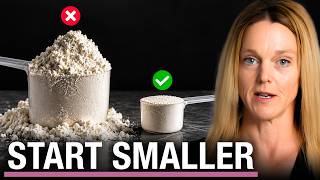
“I tell women they should start with maybe one and a half grams for one week and then work up to three grams the next week and then on the third week you're starting to get that five gram dose.”

Best practiceCreatine21:46

“We want creatine monohydrate... preferably of course Creapure because the way it's produced.”

“If you're looking at a cheaper version of creatine monohydrate, it comes as an acid wash... this is why we start to see a lot of bloating and stomach discomfort.”

Best practiceCreatine23:03

“It doesn't have an acute effect. It takes about 3 weeks for the body to be saturated.”

Best practiceCreatine26:49

“I'm talking about 3 to 5 g daily. You can take a teaspoon and stir in your coffee cuz it's just a very easy powder that's really mixable.”
BenefitIron28:44

“Vitamin D is really important for absorbing and maintaining iron stores.”

Collagen, Magnesium, and Creatine for Women: What Works, What Doesn’t, and How to Use Them

17 references

Collagen PeptidesCopperVitamin CZincMagnesiumCreatine

“If you're using type 2 collagen, which is joint specific, and you're using peptides, they can actually go and they can help attenuate the decline of some of the cartilage.”

“Collagen does not count as our daily intake of protein because it's structural and only contains one of the amino acids.”

“When people use type one and three collagen, they get strong nails and lustrous hair.”

“Walk away from vegan collagen because there's no such thing as vegan collagen.”

BenefitCopper3:09

“There's a collagen booster which is copper, zinc, and vitamin C that's going to help your body's own production.”

“Vitamin C can be used as a collagen booster to help your body's own production.”

BenefitZinc3:11

“You can use zinc as a collagen booster to help your body's own production, though it's not like ingesting collagen.”

“Magnesium is beneficial for sleep primarily because of our muscle contractions; we want to have a relaxation of everything.”

Best practiceMagnesium4:04

“We need a magnesium that crosses the blood-brain barrier to help, and this is a bisglycinate.”

“You don't want to go for magnesium oxalate because that's a laxative; you have to be very conscious to look for a bisglycinate or glycinate.”

“If you have a family history or a diagnosis of osteoarthritis, it can be beneficial to use type twos, but you want type two peptide and native.”

“There's a change across the menstrual cycle in how your body uses and regulates creatine, so having the availability of more creatine helps with that.”

Best practiceCreatine5:12

“If we're looking at supplementing with creatine, we want creatine monohydrate.”

Best practiceCreatine5:41

“Start with one to three grams and work your way up to five grams over the course of about three to four weeks to attenuate any possible side effect.”

“Cheaper versions of creatine monohydrate come as an acid wash, which is why we see a lot of bloating and stomach discomfort.”

“Once saturated, muscle works better, brain works better, and the gut is better. It maintains the gut integrity of the intestinal cells and helps with brain fog.”

“For mood and mood health, creatine is really beneficial for that too.”

Tired, Stressed, or Foggy? These 5 Women’s Supplements Are Proven To Help

13 references

Whey ProteinCreatineCollagen PeptidesOmega 3Rhodiola RoseaAshwagandha
Reported useWhey Protein0:54

“The ones that I use the most from them is their protein powder. Either their plant-based or their unflavored whey.”

Reported useCreatine1:04

“I love their creatine. So I always talk about creatine and looking for Crea Pure.”

Best practiceCreatine1:46

“I'm talking about 3 to five grams daily. You can take a teaspoon and stir in your coffee because it's just a very easy powder that's really mixable.”
“Using creatine can help bring women out of an anxiety or a depressive state much faster than just using something like a serotonin reuptake inhibitor.”

“Collagen, I can't use collagen, but I wanted to bring it up. As a plant-based individual, I don't use collagen.”

“A native collagen when ingested has an interaction with your immune system to reduce the inflammation and the signaling to degrade your cartilage.”

“Those small bits of peptides go to the target tissue and are used to regenerate some of the cartilage but also to trigger a response to stop degrading the cartilage.”

Reported useOmega 33:47

“The other must-haves really is an omega-3. It's really important for women who are super active. It's one of my go-tos for sure.”

Reported useRhodiola Rosea4:09

“These are two that I use on the regular. I use rhodiola and ashwagandha.”

“If we look at something like rhodiola, it has multi-factoral effect on the body. We can see that it modulates estrogen for peri and post-menopausal women.”

Best practiceRhodiola Rosea5:44

“When I'm traveling with jet lag, I use it to help me get into a parasympathetic state for sleeping so that it can help my body reset its circadian rhythm.”

“With ashwagandha, it's an overall stress reducer because it has a direct effect on cortisol responses.”

“It also has an effect on thyroid. So, it does have a contraindication for individuals who are using any kind of thyroid medication.”

Supplements I Recommend for Women (and How to Use Them Safely)

12 references

CreatineVitamin D3Omega 3Collagen PeptidesMagnesiumAshwagandhaL Theanine
Reported useCreatine0:08

“I started taking creatine but I got... someone was like, oh, you know, take two teaspoons. So I was taking two teaspoons which was about 10 grams.”

“If we are taking in creatine monohydrate, then we have a greater availability of that creatine to be there for our fast energetics.”

“Two five gram doses a day morning and evening help people who have really severe fatigue from low sleep and people who have depressive episodes where their actual pharmaceutical isn't working as well.”

Best practiceCreatine4:24

“I tell women they should start with maybe one and a half grams for one week, then work up to three grams the next week, and then on the third week you're starting to get that five gram dose in.”

“If you're just having creatine at a lower dose, you don't have that transient water retention. Creatine and carbohydrate will both hold water.”

“Vitamin D3 is so essential for so many other different functions from building bone, maintaining bone, maintaining muscle, muscle function, brain health, a better lipid profile, and iron absorption.”

“If we're having more omega-3 fatty acids, it helps with all the breakdown effects in our cells so we don't have as much oxidative stress and we don't have as much inflammatory responses.”

“If we're looking for skin in particular, we want type one and three. But if we start having lots of joint issues and joint pain and soft tissue problems, then we want to look for a type two.”

“Now I take a combination of collagen and magnesium. The powder kind of started because the collagen was so disgusting, like it stinks like fish.”

Best practiceMagnesium10:01

“If I were, I would look for a magnesium threonate because that's the only one that crosses blood brain barrier and can actually help with parasympathetic activation, which is what you're wanting for sleep.”

Reported useAshwagandha10:15

“I use theanine, l-theanine, and sometimes I add in some ashwagandha when I'm traveling.”

“I really prefer theanine over magnesium because it is a non-protein amino acid that is directly related and influenced by part of the GABA system in our brain.”

Dr. Stacy Sims: How Women Should Train, Eat & Recover for Long-Term Health | The Best of 2025

10 references · Dec 29, 2025

CreatineVitamin D3Omega 3Collagen PeptidesL TheanineAshwagandha
Reported useCreatine29:14

“I started taking creatine but I got... someone was like oh you know take two teaspoons... I have never felt so ill in my life where the nausea was beyond.”

“Creatine is used in all the fast energetics of our body... brain function, gut function, heart health, all of that requires creatine.”

“Bodybuilding... you're looking at 20 grams a day... that's when you get the bloating, the discomfort, you really start to put on weight from water retention.”

Best practiceCreatine33:33

“I tell women they should start with maybe one and a half grams for one week, then work up to three grams the next week, and then on the third week you're starting to get that five gram dose in.”

“Vitamin D is so essential for so many other different functions from building bone, maintaining bone, maintaining muscle, muscle function, brain health.”

“If we're having more omega-3 fatty acids, it helps with... oxidative stress... and we don't have as much inflammatory responses.”

“If we're looking for skin in particular, we want type one and three. But if we start having lots of joint issues... then we want to look for a type two.”

“Now I take a combination of collagen and magnesium... I take like a collagen powder as well.”

Reported useL Theanine39:23

“I use theanine, L-theanine... I really prefer theanine over magnesium because it is a non-protein amino acid that is directly related and influenced by part of the GABA system.”

Reported useAshwagandha39:28

“Sometimes I add in some ashwagandha when I'm traveling.”

Stacy Sims: The 3 Supplements Women Actually Need

10 references

Omega 3CreatineVitamin D3CaffeineBeta AlanineCollagen Peptides

“We want Omega-3 Fatty Acids because they're really good at antioxidative properties. Omega-3s come in and help with mitigating some cellular damage.”

Best practiceCreatine4:05

“We're looking at 3 to 5 g a day. Over the course of 3 weeks, your body will fully saturate.”

Best practiceCreatine5:06

“If you are dosing with Creatine 5 g twice a day, it improves the capacity to be more stress resilient.”

“Creatine helps maintain the integrity of our intestinal cells because we now have the Creatine that's there to kind of keep the mucosa lining intact even under stress.”

“It's really important for things like osteoporosis prevention. We see it's important for muscle and immunity, also really important for brain health.”

Best practiceCreatine6:38

“Should you take it every single day? Yeah, absolutely.”

“If you're really looking at the efficacy of your pre-workout, it's Beta-Alanine and Caffeine. Those are the two things that are allowing you to feel less fatigue.”

“Beta-Alanine is a vasodilator, also provides some of the essential coenzymes your body or your muscles need for faster contractions.”

“I get frustrated with Collagen because people think about Collagen Peptides and collagen protein as being dietary protein for muscle and neurotransmitters. It's not the same.”

“Just to be clear there, it doesn't count towards your protein intake for the day. No, it does not.”

The Only 3 Supplements Women 40+ Actually Need | Backed by Science

10 references · Oct 20, 2025

Omega 3CreatineVitamin D3CaffeineCollagen Peptides

“Omega-3 fatty acids are really good at antioxidative properties, helping mitigate cellular damage and supporting brain health.”

Best practiceCreatine2:26

“We're looking at three to five grams a day. Over the course of three weeks, your body will fully saturate.”

“Creatine is really important for every fast energetic in the body, including the brain, gut, heart, and muscle performance.”

Best practiceCreatine3:27

“If you are dosing with creatine five grams twice a day when under fatigue or high stress, it improves the capacity to be more stress resilient.”

“Creatine helps maintain the integrity of our intestinal cells because it helps keep the mucosa lining intact even under stress.”

“We see that it's beneficial in pregnancy as well because pregnancy is a fast energetic with high calorie requirements.”

“Vitamin D3 is really important for osteoporosis prevention, muscle, immunity, and brain health.”

Best practiceCreatine4:58

“You should take it every single day, including rest days.”

“Caffeine and beta-alanine are the two things that allow you to feel less fatigue and improve muscle function.”

“People think about collagen peptides as being dietary protein for muscle, but it's a specific structural protein that doesn't count towards your protein intake for the day.”

What 3-5g of Creatine Daily Does for Women's Brain, Bones and Gut

9 references

Creatine

“We need creatine for every fast energetic in the body, including the brain, the heart, the gut, and the bone.”

Best practiceCreatine1:39

“It takes about three weeks to saturate the body with three to five grams of creatine.”

“Creatine helps maintain mucosal lining integrity in the gut, which can prevent endotoxin release or what people call leaky gut and IBS situations in runners.”

“Creatine is really important for improving brain metabolism and helping recovery from a concussion or TBI.”

Best practiceCreatine3:18

“A systematic review concluded that women aged 18 to 60 should be using three to five grams of creatine supplementation to optimize and improve overall health.”

Best practiceCreatine3:32

“For shift workers, jet lag, or overnight combat missions, there is a time and place to use higher doses, around 0.38 grams per kilogram.”

Best practiceCreatine4:15

“An acute high dose of creatine isn't effective for jet lag in the moment because it takes time to cross the blood-brain barrier; you need to dose up before traveling.”

Best practiceCreatine4:44

“Cycling creatine is a moot point for lower doses; if you take a continuous low dose, your body fully saturates and stays there.”

“Creatine can lead to transient bloating and water retention in the muscle, which usually goes away within two to three weeks.”

The Creatine Mistake Making Women Bloated

9 references

Creatine

“The population that benefited the most from just the 5 g creatine dose were women aged 18 to 65.”

“If we are boosting the brain with creatine, it's not being as pedantic with fatigue, meaning that it doesn't have as much of that lag time and cognitive lull that it has when it perceives itself of being fatigued.”

Best practiceCreatine2:35

“If we have a baseline of 3 to 5 grams, we know that 5 tends to be the sweet spot for, like, boosting saturation levels and boosting all the systems.”

Best practiceCreatine2:44

“If you're a shift worker, if you have lots of transmeridian travel and jet lag, if you're having incidences of high stress and low sleep, then yes, boost it to 10 to 15, right?”

Reported useCreatine3:21

“When I travel, which I do a lot, then I'm boosting it to 10 grams so that I can get off the plane and right into a meeting or a conference and not have that, oh my gosh, head swings from jet lag.”

Best practiceCreatine4:12

“Let's start with 1 and 1/2 g and work our way up to five.”

“If you're using a cheaper version, then you're using a derivative of formaldehyde, which isn't optimal because it goes through an acid wash.”

Best practiceCreatine4:55

“If you're someone who doesn't like to stir in powders, then go for a bar.”

Reported useCreatine5:14

“I'm—I lean into the powder because I find it's really easy. I travel with it. I can stir it into cold drinks, drink it right away.”

Should Women Supplement With Creatine? | Dr. Stacy Sims on The Diary Of A CEO

9 references

Creatine
Best practiceCreatine1:15

“The dosing for bodybuilding is five grams four times a day with one gram of carbohydrate.”

“Creatine helps store water within the muscle with glycogen to enhance the amount of enzymes that are available for muscle contraction.”

Best practiceCreatine1:43

“For women, the dose is three to five grams only once a day without carbohydrate.”

Best practiceCreatine2:28

“If you want to load, we see loading protocols over the course of two weeks where you saturate the body with five grams four times a day.”

Best practiceCreatine2:38

“For women, three to five grams will fully saturate the body over the course of three weeks.”

“Creatine is really important for maintaining the integrity of the mucosal lining, which helps reduce the incidence of GI distress in women.”

“Women who are taking three to five grams of creatine will come out of a depressive episode more so than women who are just using an SSRI.”

“There is an improvement in muscle capacity because you're increasing the amount of buffer that's available for muscle contractions.”

“You will gain water weight because you're also storing more within the muscle if you try the loading strategy.”